Travel and Expense
CAUBO 2026: What We Learned from Canada’s Higher Education Community
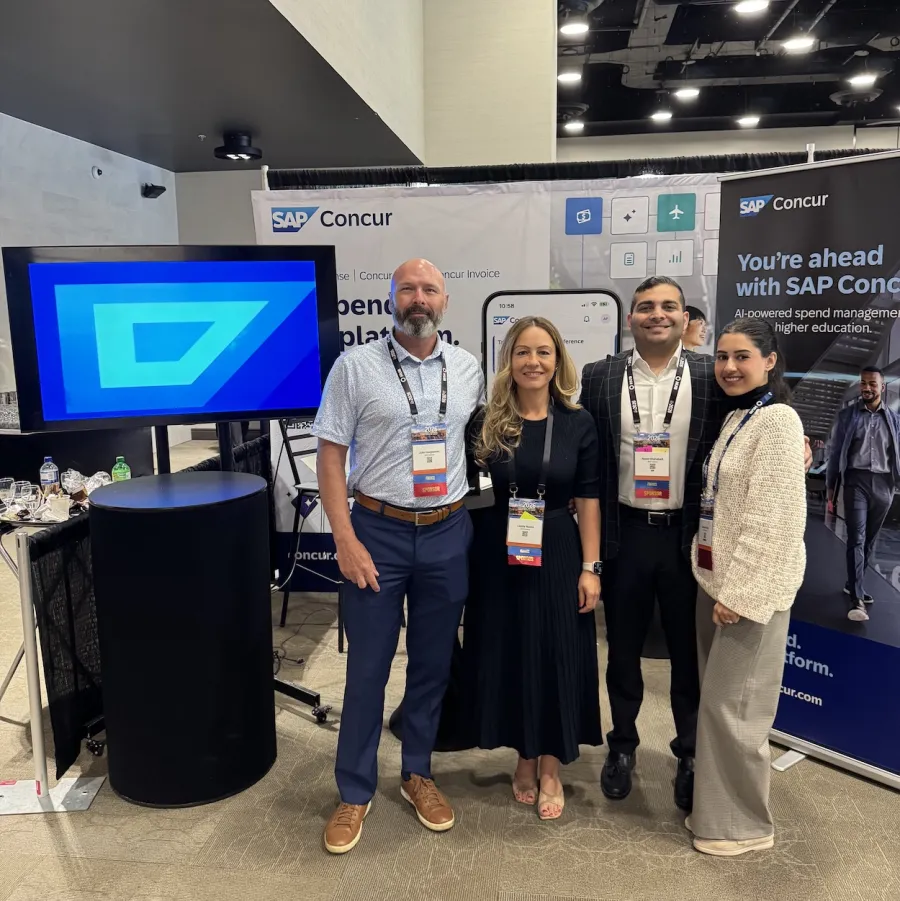
This year marked SAP Concur’s first time attending the CAUBO Annual Conference in St. John’s, Newfoundland and Labrador, and we had a great time connecting with higher education leaders from across Canada.
One of the highlights was seeing so many familiar faces in attendance. Roughly a third of attendees were already using SAP Concur solutions, including teams from the University of Toronto, Concordia University, Queen’s University, and McMaster University. It was wonderful to hear how they’re using SAP Concur to simplify travel and expense management across campus.
One attendee even shared a story about snapping a photo of a coffee receipt on the way to the conference using the SAP Concur mobile app and having it automatically captured and processed. It was a small moment, but it spoke to the fact that when spend management is easy, people appreciate it!
We also had the chance to meet several institutions that were exploring SAP Concur for the first time. Those conversations were just as valuable.
It was insightful to hear more about the unique challenges campuses across Canada are facing and how there is an almost unified view that technology is the solution to help simplify everyday work for employees and finance teams alike.
Regardless of whether people were already using SAP Concur or just learning about it, a few key topics kept coming up throughout our conversations…
1) Decentralization creates unique spend management challenges
One theme that came up consistently at CAUBO is that higher education institutions are incredibly decentralized.
Faculties, departments, research groups, and administrative teams often operate with significant autonomy, managing their own budgets, travel, and purchasing decisions. While that flexibility is important, it can also make it challenging to maintain visibility, enforce policies, and manage spending consistently across the institution.
Many attendees spoke about the balancing act between empowering departments to operate independently while still providing finance leaders with the oversight and controls needed at an institutional level.
This often led to discussions about how institutions can create greater consistency across travel, expense, invoice, and purchasing processes without introducing additional complexity for faculty and staff.
The key takeaway was clear: for many institutions, the challenge isn’t managing a single expense transaction. It’s creating visibility and consistency across a highly decentralized environment.
2) What starts as an expense conversation rarely ends there
Another interesting takeaway was how often conversations expanded beyond expense management.
Many attendees initially stopped by our booth to discuss employee reimbursements, expense reporting, and simplifying administrative processes. However, as conversations progressed, there was often a realization that the impact of spend management reaches much further across the institution.
For example, a discussion about streamlining expense submissions often led to conversations about travel booking, policy compliance, invoice processing, traveller visibility, and duty of care. What started as a finance conversation quickly became a broader discussion about risk management, employee experience, operational efficiency, and institutional oversight.
For many institutions, these processes are managed by different teams and viewed independently. As a result, the cumulative impact of connecting them isn’t always immediately obvious.
One of the most common reactions we heard was, “I hadn’t thought about that.”
Attendees began to see how improvements in one area can create benefits across many others:
- Better travel visibility can strengthen duty of care
- Automated policy controls can reduce administrative effort and compliance risk
- Centralized spend data can improve decision-making across departments
- A better employee experience can reduce frustration for faculty and staff who travel regularly
The takeaway wasn’t simply that institutions are looking for better expense management. It was that many are starting to recognize the broader organizational impact that can come from managing spend, travel, compliance, and risk as part of a connected platform.
3) Interest in AI is growing, but practicality comes first
AI was another popular topic throughout the conference, but the conversations were refreshingly grounded. Attendees wanted to understand how it could help solve real problems, reduce manual work, improve accuracy, and make everyday tasks easier for employees and finance teams.
That sparked a lot of conversations around how SAP Concur has been embedding AI across spend management workflows.
From validating data and automating repetitive tasks to helping identify exceptions, attendees had a chance to better understand the practical applications of AI that are already delivering proven value.
There was also plenty of curiosity about Joule AI assistants and AI agents, and how they could help faculty and staff complete tasks faster, surface information more easily, and spend less time on administration.
More than anything, the conversations reinforced that AI is most valuable when it helps people work more efficiently behind the scenes.
You’re ahead with SAP Concur
What stood out most at CAUBO was the openness to finding new ways to tackle familiar challenges. Whether institutions were already using SAP Concur or exploring it for the first time, the conversations focused on helping employees work more efficiently while giving finance teams greater visibility and control.
If you’re looking for similar answers, download our infographic, Canadian Higher Education Institutions: 5 Ways to Get Ahead of Spend.
Want to see SAP Concur solutions in action? Talk to us today.